3.0 CSL
The lightweight road-car icon behind the CSL legend.

1973 European 3,153 cm³ road specification · Factory source

Every figure, in one place.
Performance
- Power
- 206 PS · 203 hp · 152 kW
- Torque
- 286 Nm
- 0–100 km/h
- 7.3 s
- Top speed
- 220 km/h
- Power-to-weight
- 6.17 kg/PS
Engine and drivetrain
- Engine
- M30 · Inline-six
- Displacement
- 3,153 cm³
- Induction
- Naturally aspirated
- Gearbox
- 4-speed manual
- Drivetrain
- Rear-wheel drive
- Powertrain
- Petrol
Body and dimensions
- Production
- 1972–1975
- Body
- Coupés
- Length
- 4,630 mm
- Width
- 1,730 mm
- Height
- 1,370 mm
- Wheelbase
- 2,625 mm
- Kerb weight
- 1,270 kg
- Fuel tank
- 70 L
Where this car ranks across all 93 cars in the catalogue.
Why you’d want one
- Understanding the lightweight CSL tradition.
Know before you buy
- Rust in sills, floors and arches is the main concern
- Parts are scarce; originality affects value
- Specialist servicing and valve adjustment required
Commonly reported ownership points, not a guarantee of faults. Always get an independent inspection.
Lightness before the modern CSLs.
The road-going E9 3.0 CSL uses lightweight body construction to give the coupé a different brief. This page describes the road car, keeping the more powerful racing versions separate.
Understanding the lightweight CSL tradition.
Body condition and correct lightweight components matter.
Road-car and racing CSL specifications are different.
M30 · Inline-six
The later road-going E9 CSL uses a 3,153 cm³ naturally aspirated straight-six with 206 PS. Aluminium body panels and reduced equipment serve its lightweight philosophy. This entry describes the road car, rather than the much more powerful racing CSLs.
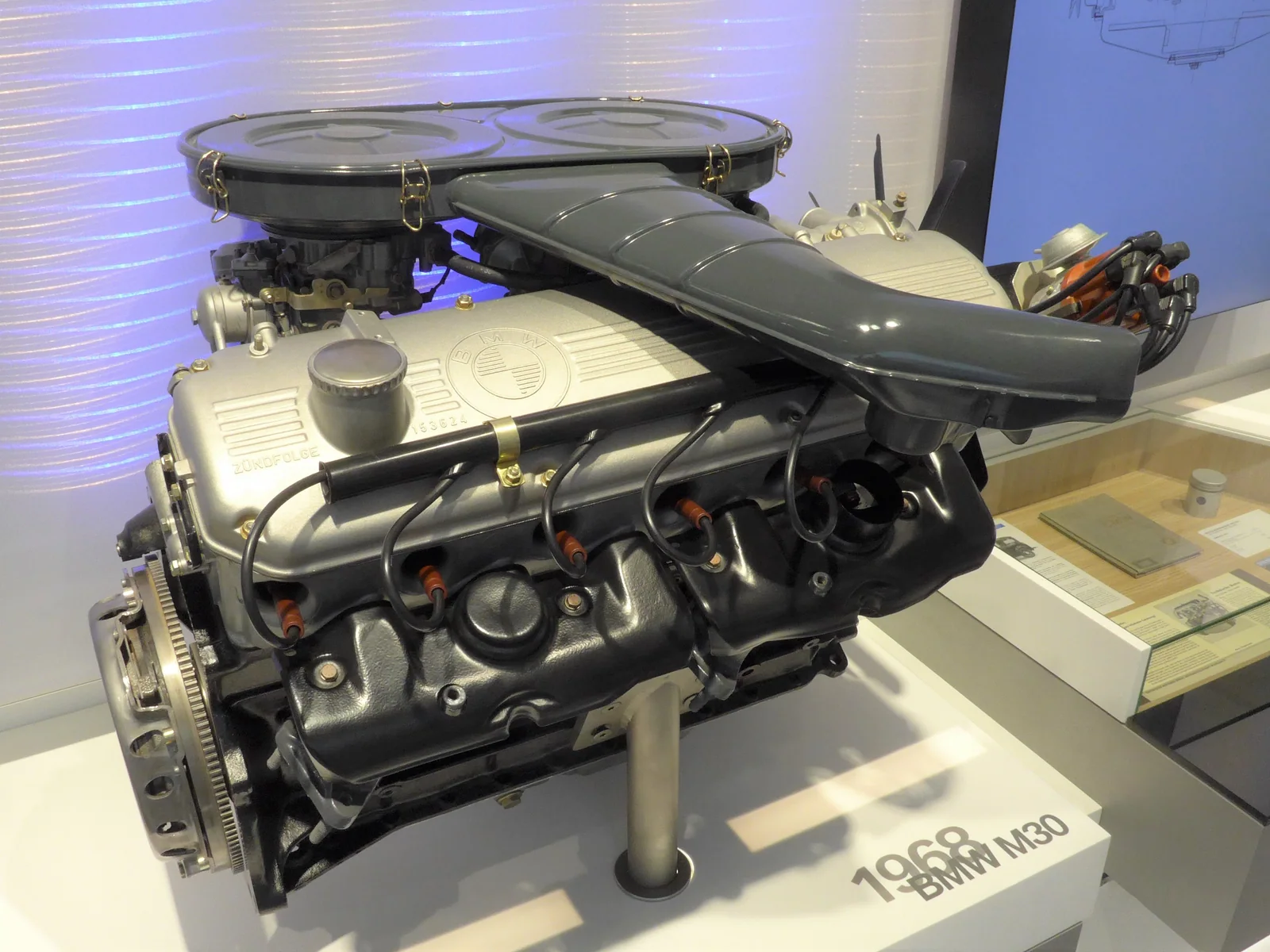
M30 museum engine with a carburettor intake. Family reference; the selected 3.0 CSL uses a different fuel-system specification.
M30 · Petrol
The later road-going E9 CSL uses a 3,153 cm³ naturally aspirated straight-six with 206 PS. Aluminium body panels and reduced equipment serve its lightweight philosophy. This entry describes the road car, rather than the much more powerful racing CSLs.
Naturally aspirated power
Air enters without a turbocharger. Cylinder capacity, valve timing and engine speed shape the engine’s torque delivery.
Rear-wheel drive
A manual transmission sends drive to the rear wheels. The linked BMW archive summary verifies power and displacement; a torque figure is not published here.
1973 European 3,153 cm³ road specification
These figures describe the selected specification and engine output. PS is metric horsepower. Equipment, power ratings and homologation can differ between markets and model years. Open the BMW source to inspect the original factory information.
The full specification.
Related cars


Photo credits
- 1974 BMW 3.0 CSL 2.jpg — Calreyn88 · CC BY-SA 4.0 · Original