X5 xDrive35i
The turbocharged straight-six, in a different shape.


2014 US specification · Заводской источник

Все цифры в одном месте.
Динамика
- Мощность
- 304 PS · 300 hp · 224 kW
- Крутящий момент
- 407 Nm
- 0–100 км/ч
- 6.5 s
- Максимальная скорость
- 210 km/h · ограничена
- Отношение мощности к массе
- 6.81 kg/PS
Двигатель и трансмиссия
- Двигатель
- N55 · Рядная шестёрка
- Объём
- 2 979 cm³
- Наддув
- Twin-scroll turbo
- Предельные обороты
- 7 000 rpm
- Коробка передач
- 8-ступенчатый автомат
- Привод
- Полный привод xDrive
- Силовая установка
- Бензин
Кузов и размеры
- Выпуск
- 2013–2018
- Кузов
- Внедорожники
- Длина
- 4 886 mm
- Ширина
- 1 938 mm
- Высота
- 1 762 mm
- Колёсная база
- 2 933 mm
- Снаряжённая масса
- 2 070 kg
- Топливный бак
- 85 L
Место этой машины среди всех 93 машин каталога.
Почему её хочется
- A spacious six-cylinder SUV.
Что знать перед покупкой
- Течь прокладок корпуса масляного фильтра и клапанной крышки
- Отказ электрической помпы и термостата
- Пластиковый патрубок наддува может треснуть под давлением
Часто упоминаемые владельцами моменты, а не гарантия неисправностей. Всегда проводите независимый осмотр.
An X5 without a V8.
The X5 xDrive35i uses a turbocharged straight-six to power the larger X5 body. It is a helpful reminder that a big BMW SUV does not automatically need eight cylinders.
A spacious six-cylinder SUV.
Check parking space as carefully as engine output.
This X5 and the smaller X3 xDrive35i share the N55 family label.
N55 · Рядная шестёрка
A 2,979 cm³ inline-six with one twin-scroll turbocharger, direct injection and Valvetronic.
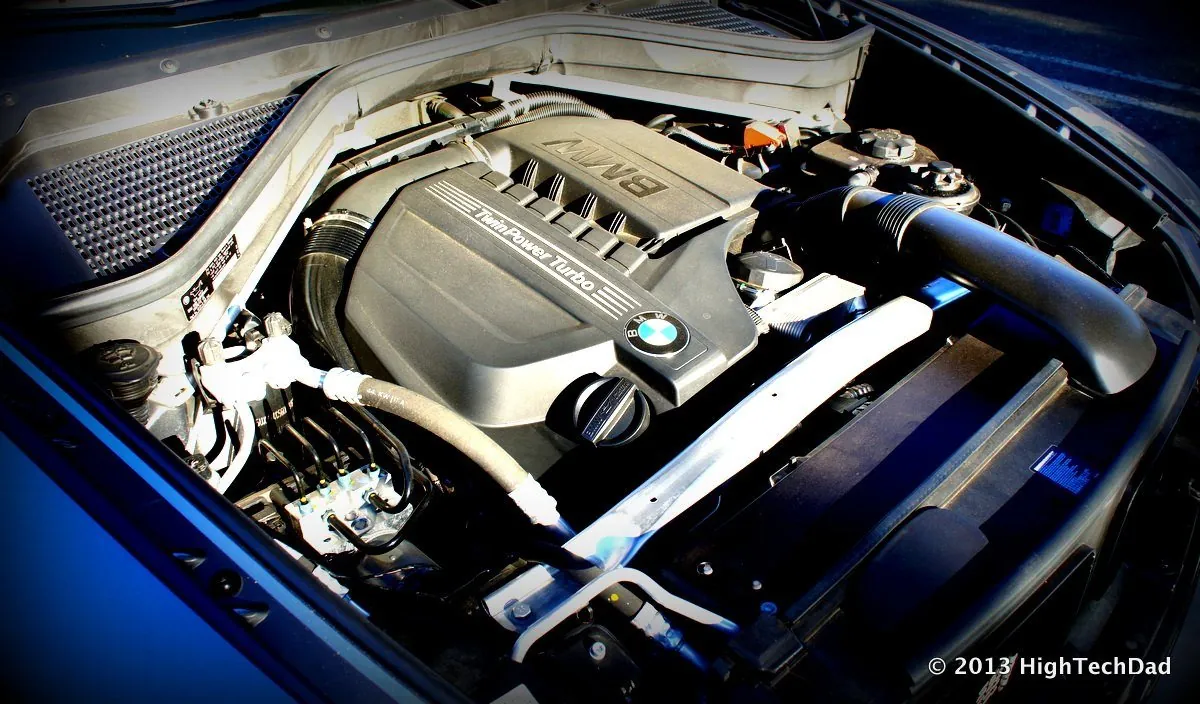
N55 in a 2013 X5 xDrive35i. Engine-family reference; covers and installation differ across applications.
Same family. Different application.
This model uses a longitudinal 3.0-liter N55 inline-six. Its factory output and vehicle configuration are specific to the model and market shown.
Twin-scroll is not twin-turbo.
One turbocharger has two exhaust passages feeding its turbine. Exhaust energy spins the compressor, which supplies pressurized intake air. The turbo is largely hidden by surrounding hardware in this reference photograph.
Air in. Heat out.
Filtered air enters the compressor, then passes through charge-air cooling before reaching the intake manifold. The intercooler cools the air heated by compression.
Valvetronic & VANOS.
Valvetronic adjusts intake-valve lift. VANOS adjusts camshaft timing. They control different aspects of the valve operation; neither is another turbocharger.


