iX1 xDrive30
Two electric motors. Compact dimensions. 230 kW with boost.

November 2022 European specification · temporary boost included · Factory source

Every figure, in one place.
Performance
- Power
- 313 PS · 308 hp · 230 kW
- Torque
- 494 Nm
- 0–100 km/h
- 5.6 s
- Top speed
- 180 km/h · limited
- Power-to-weight
- 6.66 kg/PS
Engine and drivetrain
- Engine
- eDrive · Dual-motor all-wheel drive
- Induction
- 64.7 kWh usable
- Gearbox
- Single-speed (front and rear motors)
- Drivetrain
- Electric all-wheel drive
- Powertrain
- Electric
Body and dimensions
- Production
- 2022–present
- Body
- SUVs
- Length
- 4,500 mm
- Width
- 1,845 mm
- Height
- 1,616 mm
- Wheelbase
- 2,692 mm
- Kerb weight
- 2,085 kg
Battery and charging
- Usable battery
- 64.7 kWh
- Range (WLTP)
- 440 km
- Peak DC charging
- 130 kW
Where this car ranks across all 93 cars in the catalogue.
Why you’d want one
- A compact electric SUV with two driven axles.
Know before you buy
- Battery health: request a state-of-health report
- Check charging port and on-board charger function
- Heavier than combustion equivalents; tyres wear faster
Commonly reported ownership points, not a guarantee of faults. Always get an independent inspection.
Two motors in the compact X1 family.
The iX1 xDrive30 puts an electric drive unit on each axle. Its quoted peak output includes temporary boost, an important qualification when reading the headline number.
A compact electric SUV with two driven axles.
Try real charging access and check the battery’s condition.
The xDrive30 rating includes a temporary boost function.
eDrive · Dual-motor all-wheel drive
Two electrically excited synchronous drive units coordinate the front and rear axles. Their combined factory output reaches 230 kW including temporary boost, with 494 Nm of system torque.
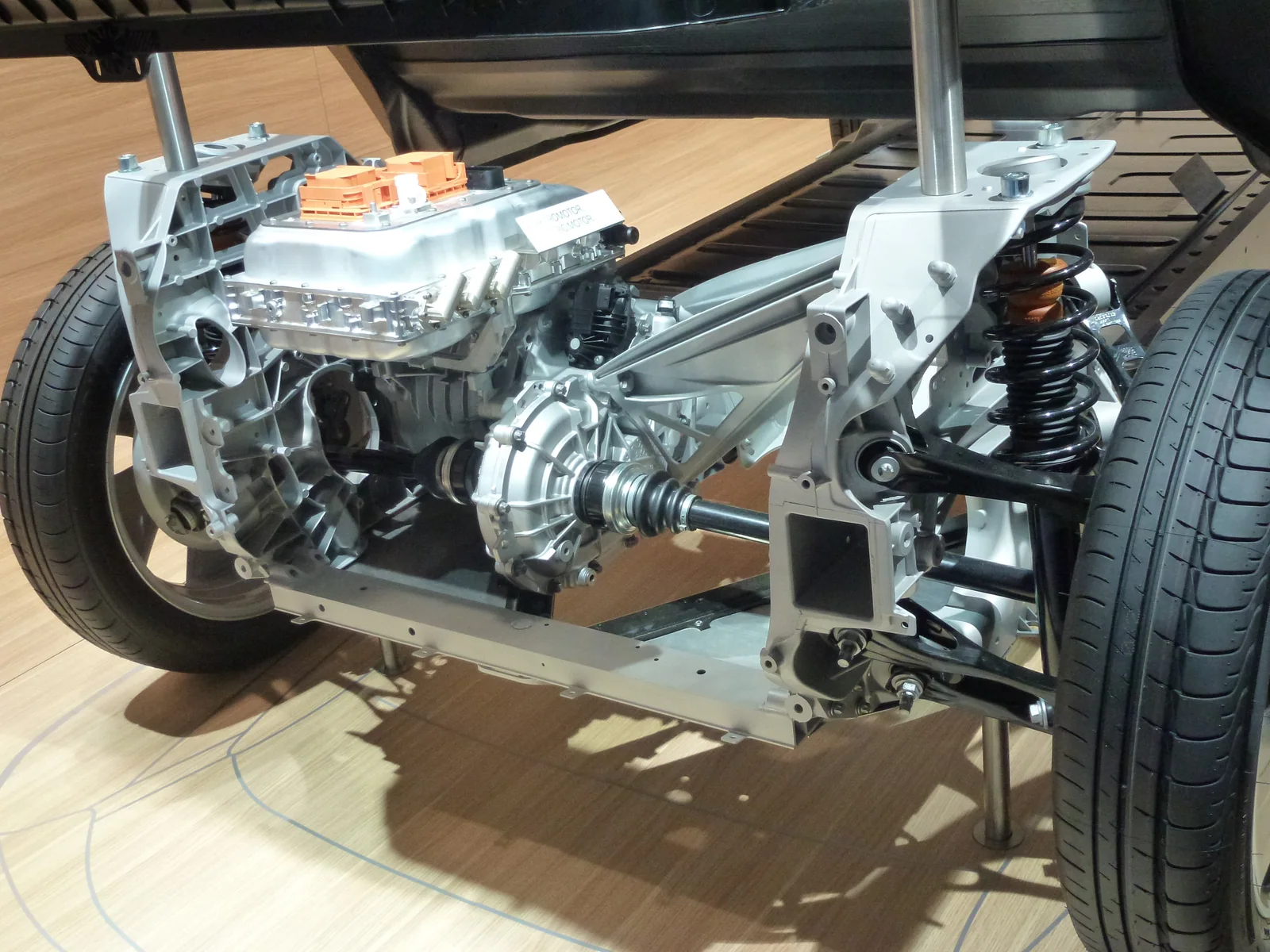
BMW i3 electric drive unit shown in 2013. System reference: later i4, i5, i7 and iX drive units have different generations, motors and installation.
One electric motor on each axle
Two electrically excited synchronous drive units coordinate the front and rear axles. Their combined factory output reaches 230 kW including temporary boost, with 494 Nm of system torque.
64.7 kWh usable energy
The underfloor lithium-ion battery has 64.7 kWh of usable energy in this specification. Usable capacity is the energy available within the operating window, distinct from gross capacity.
Recover energy during deceleration
The electric drive can operate as a generator when slowing down. Power electronics manage the flow of recovered energy into the battery; physical brakes provide additional stopping force when needed.
November 2022 European specification · temporary boost included
The 230 kW rating includes temporary boost. The two individual motor peaks are not added together to calculate system output. Battery usable energy is 64.7 kWh in BMW’s November 2022 data sheet; later specifications can differ.
The full specification.
Related cars


Photo credits
- 2023-04 BMW iX1 U11 front view.jpg — Wikisympathisant · CC BY-SA 4.0 · Original